

SANDAG board debates federal access to ARJIS database
Board weighs whether regional justice database agreements with federal agencies undermine California’s sanctuary law amid immigration enforcement concerns

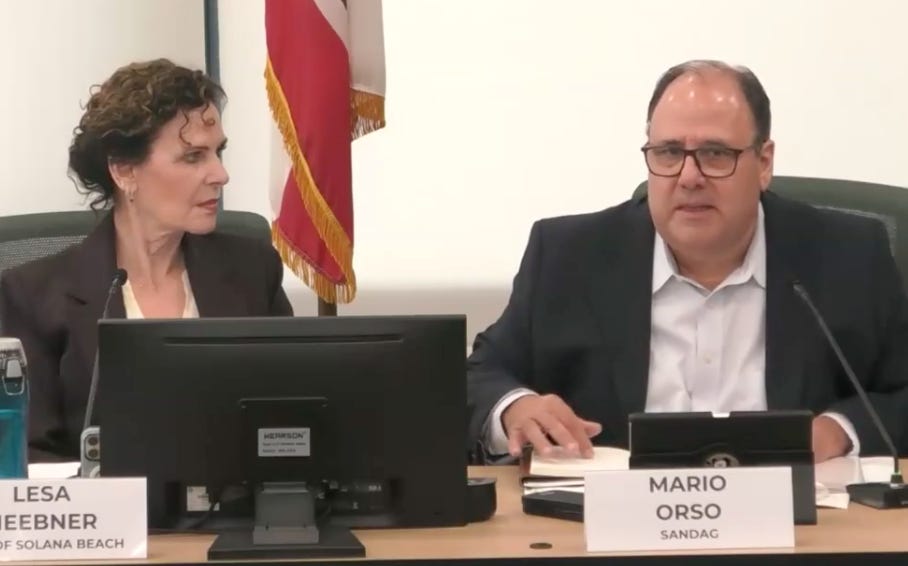
COUNTY — The San Diego Association of Governments Board of Directors clashed on Friday over whether to end data-sharing agreements with federal law enforcement agencies, citing fears of immigration enforcement undermining California’s sanctuary law.
At issue is the Automated Regional Justice Information System (ARJIS), a regional system linking 65 local agencies to share criminal justice data. Critics say Immigration and Customs Enforcement (ICE) exploits the system to bypass Senate Bill 54 and target undocumented or illegal immigrants, while supporters say it’s vital for fighting against serious crimes like human trafficking and drug smuggling.
San Diego City Councilwoman Vivan Moreno made a motion to revisit the ARJIS contracts with federal agencies, but Chairwoman Lesa Heebner, mayor of Solana Beach, directed the matter to the Executive Committee for further study.
“My concern today is that this information is being weaponized by the federal government to target certain individuals,” Moreno said. “ICE is using this technology to gather information and literally hunt human beings. ICE is not just going after criminals. I am concerned that these technologies are weaponizing public dollars, and hurting our communities and really undoing what makes the San Diego region unique.”
Legal obstacles, next steps
Orso said ARJIS operates as a “data-sharing warehouse,” and stressed SANDAG doesn’t own the data, but serves as a conduit for information controlled by individual cities and the county.
The system logs every query, but a source of debate was that proactive auditing is not standard practice. Oversight, Orso and others said, relies on an agency self-policing, along with audits from the California Department of Justice.
Moreno said self-policing is not acceptable, saying it “is not a safeguard, it’s a vulnerability.”
