

Oceanside’s sand project enters testing phase
A scaled physical model at Oregon State University is testing whether an artificial reef, headlands, and sand nourishment can help restore and retain sand along Oceanside’s eroded shoreline

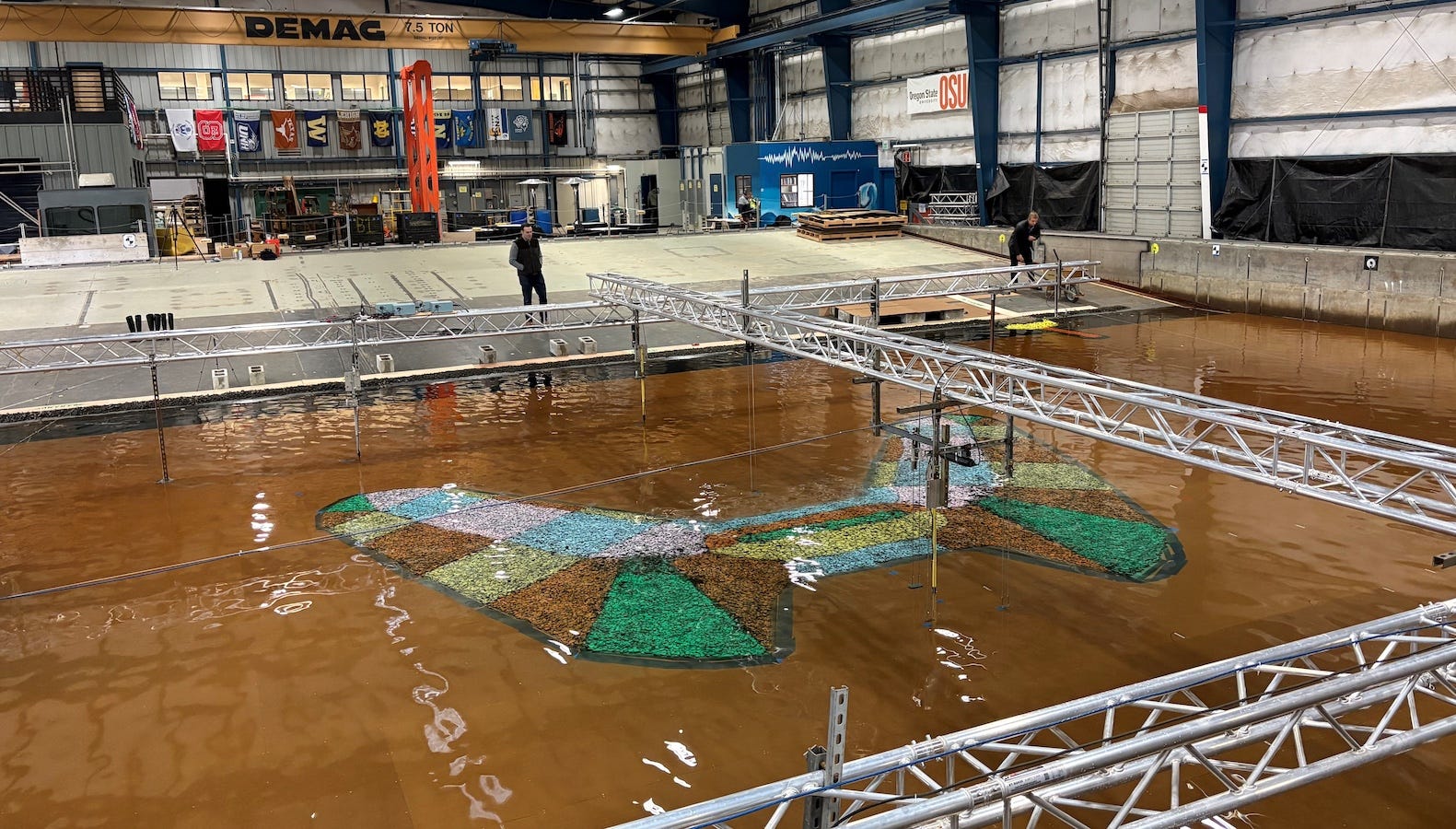
OCEANSIDE — The city’s ambitious sand replenishment program has moved into a new phase with physical modeling in a directional wave basin.
Known as RE:BEACH, the pilot program’s goal is to strengthen coastal resilience, while protecting and enhancing public access, surfing resources, and replenishing and retaining beach sand along the city’s southern coastline. The city awarded the contract to Australia-based International Coastal Management and its “living speed bumps” concept, which is now testing its proposal in a directional wave basin at the O.H. Hinsdale Wave Research Laboratory at Oregon State University, according to a press release.
The testing at a directional wave basin, which is the only large-scale wave basin on the West Coast capable of supporting a full-scale experimental modeling of coastal processes and wave-structure interactions under highly controlled conditions. The physical model is a 1:35 scaled version of the Oceanside coastline from Seagaze Drive to Wisconsin Avenue, with the proposed project elements placed within the modeled coastline.
The city aims to break ground on the project this year.
One goal for the city and ICM is to replicate the project down to the Carlsbad border if the first phase proves successful. The project consists of an artificial reef, two artificial headlands and sand nourishment.
“Through this rigorous technical analysis, we’re developing an artificial reef that works with natural coastal processes to retain sand and restore eroded City beaches,” said Jayme Timberlake, Oceanside Coastal Zone administrator. “Science and modeling are the basis of every decision we make on this project.”
To perform the modeling, the project features are built to model scale in the 160-foot by 87-foot wave basin, and then tested against various oceanographic conditions (e.g., tides and waves) to see how the design performs, according to city officials. The physical modeling timeline is as follows:
December 2025 — January 2026: Fabrication and bathymetry construction
February–March 2026: Instrument setup, baseline evaluation, reef and headland installation, and sequential testing of multiple reef modifications, including sediment movement
Late March 2026: Completion of testing and evaluation
