


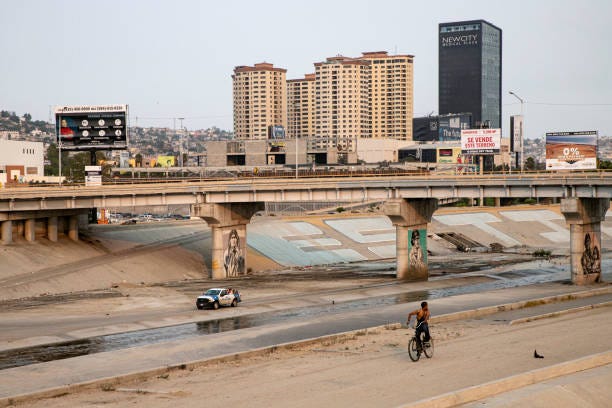
SAN DIEGO — The county is moving forward with plans to tackle the decades-long Tijuana River crisis after approving a study and conceptual engineering work for a potential treatment plant or water diversion system.
Funding for the treatment plant or diversion system could include a sales tax increase, while the project itself carries an estimated price tag of up to $1 billion, Supervisor Terra Lawson-Remer said earlier this year. It would address transboundary sewage and toxic waste flowing from the river into the Pacific Ocean at Imperial Beach.
Approved 4-1 on Tuesday, with Supervisor Joel Anderson in opposition, the county will allocate $1.8 million to fund the first of three phases. Phase 1 calls for an 18-month process where consultants will evaluate the project’s pathway, identify sites and land-rights requirements, map permits, cost estimates, outline financing options and engage stakeholders. County staff will then return to the board with the top options.
Phase 2 would focus on refining any design, costs and delivery approaches once the board selects a project. Phase 3 will finalize permitting, which requires studies under the California Environmental Quality Act (CEQA) and National Environmental Policy Act, and seek approvals from state and federal regulators, potentially including coordinating with the International Boundary and Water Commission (IBWC).
“For 60 years, the people of the South Bay have been promised a fix,” Supervisor Paloma Aguirre said. “The skepticism in my community is not just understandable; it’s been earned. So, I want to speak directly to that skepticism today because this item is about more than a treatment system; it is about who can be trusted to deliver. Here’s what I know about trust: you don’t rebuild it with words; you rebuild it by showing up, doing what you said, and being honest about what comes next.”
She has been vocal for years about the river’s sewage and toxic pollutants, and campaigned on the Tijuana River in 2025. She has been critical of the slow-moving U.S. and Mexican progress, although plans have ramped up to expand the South Bay International Wastewater Treatment Plant (SBIWTP).
Lawson-Remer’s board letter said that from 2018 through 2026, more than 200 billion gallons of polluted water have crossed into the South Bay containing untreated sewage, heavy metals, industrial chemicals, pesticides and forever chemicals. She also said local fish populations have been decimated, while Aguirre said the local estuary is on the verge of collapse.
