

Column: Roundabouts, roads and the art of good infrastructure
A Midwest road trip offered more than great barbecue and scenic landscapes. It became a firsthand lesson in how thoughtful infrastructure can improve safety, traffic flow and quality of life

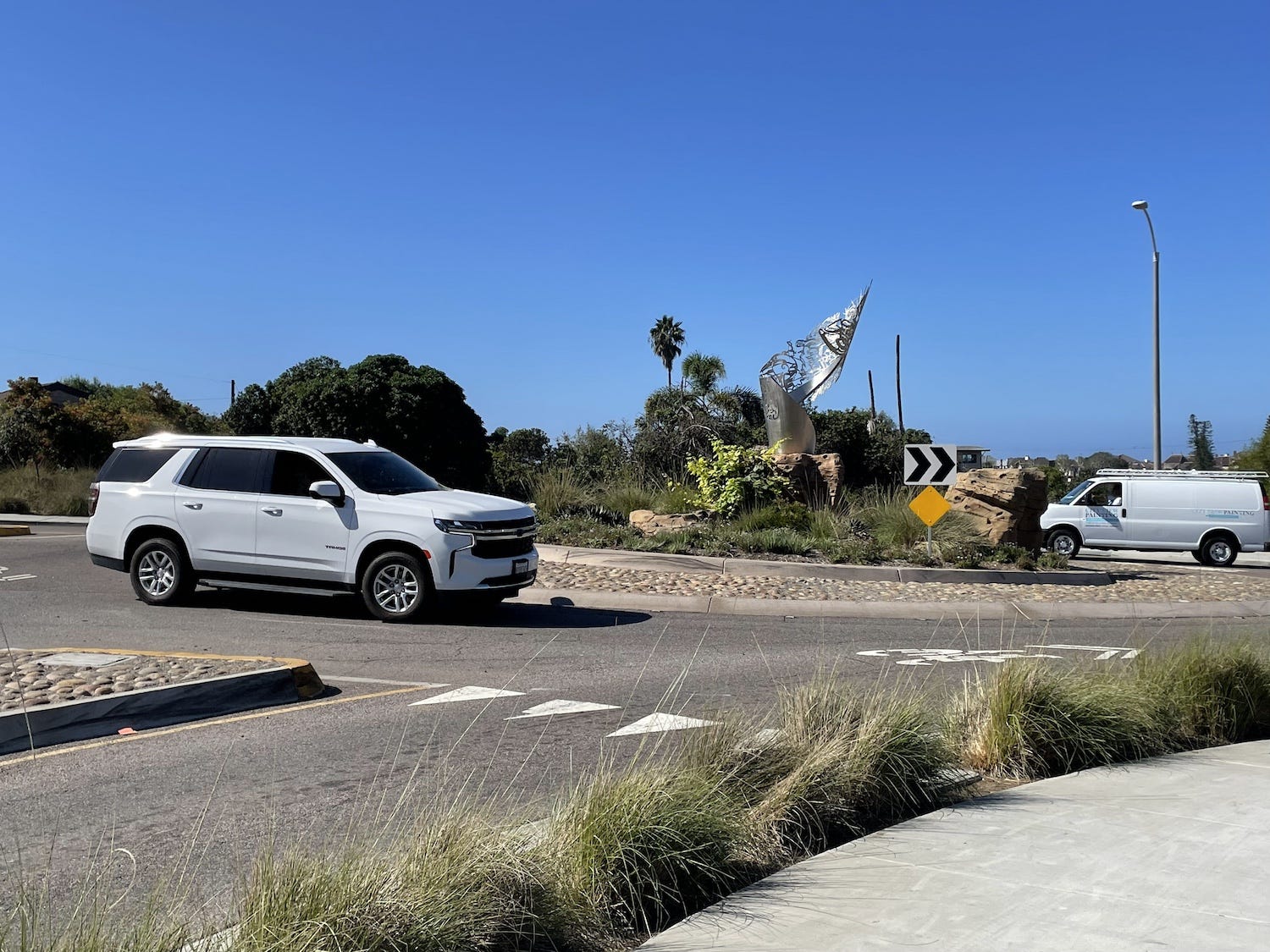
I’m uncertain if my age is driving my intrigue and appreciation for infrastructure when I travel, or whether it’s marveling at engineering, or both.
Either way, I found myself gawking at such feats in two places during a road trip across the Midwest this summer. One was in Carmel, Indiana, while the other came out of left field, or perhaps more accurately, a corn field in Hays, Kansas.
Both cities were along our drive on Interstate 70. My girlfriend and I traveled east along the highway with stops in Denver, Kansas City and Indianapolis.
The highway was also a subject of intrigue as we witnessed the evolution of broken-down, worn, and rutted stretches of I-70 through most of Colorado, but one of the cleanest, nicest stretches of highway perhaps anywhere in the country through Kansas.
The trip was also my first time going cross-country, which was another thrill to see the vast landscapes, rivers, and little towns dotting the landscape. In Kansas, part of the infamous Tornado Alley, we saw signs of a recent storm or twister as billboards, trees and some structures were ripped to pieces.
As we made our way through the state, it was time for a pit stop, and Hays (home to the famous Fort Hays) was our destination. We exited I-70 and all of a sudden, boom, there was a roundabout.
I had never seen a roundabout on an exit, but rather I’ve only heard about them through my work and interviews with city officials in North County and the former mayor of Carmel. Regardless, my brain raced but then slowed as I quickly realized the roundabout was a simple process of navigation and careful driving. The underpass was connected by a pair of roundabouts, known as a dogbone, and made it so easy to exit and enter I-70.
